
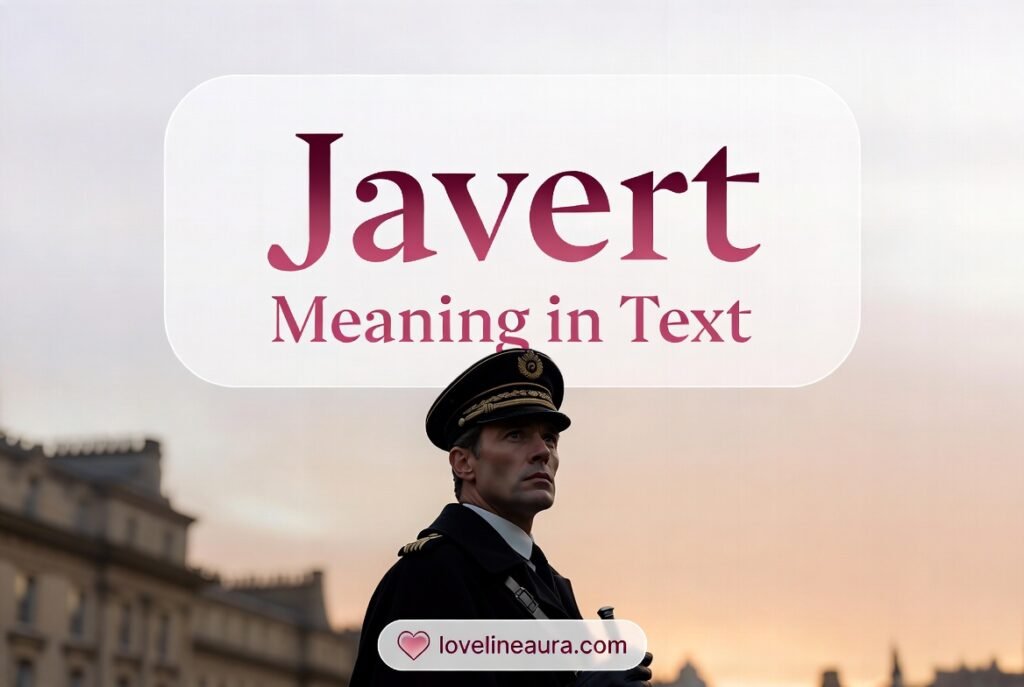

Understanding Javert meaning helps readers appreciate Victor Hugo’s unforgettable literary character from Les Misérables. This fictional character serves as the primary antagonist, representing absolute law, justice, and unwavering duty.
As a determined police inspector and ruthless inspector, Javert believes rule enforcement outweighs compassion, mercy, and forgiveness. His rigid personality, black and white morality, and relentless character create lasting moral conflict throughout the remarkable story.
This character analysis explores character symbolism, literary symbolism, and the powerful redemption theme surrounding Jean Valjean. You will discover meaning explained through thoughtful literary analysis, highlighting justice versus mercy, law versus compassion, and human nature.
Whether you are literature students, passionate readers, theatre fans, or simply curious about popular culture, this educational guide offers valuable insight. Explore why this tragic character, famous for his obsession with justice, relentless pursuit, and ultimate suicide, remains among the greatest Victor Hugo characters in classic literature.
Also Read This: GNG Meaning in Text: What It Means, How People Use It
What Does “Javert” Mean?
At the most basic level, “Javert” is not a dictionary word with a plain modern definition. It is the name of one of the most famous characters in Victor Hugo’s Les Misérables. When people search for Javert meaning, they are usually asking one of three things: who he is, what he represents, or why his story matters so much.
That makes the phrase Javert meaning more literary than literal. The name points to a character who stands for law, order, duty, and moral rigidity. In other words, the meaning of Javert is not found in a wordbook. It is found in the role he plays in the novel and the ideas Victor Hugo built around him.
Who Is Javert?
Javert is a police inspector in Les Misérables. He becomes one of the central forces in the story because he pursues Jean Valjean with relentless focus. He does not hunt Valjean out of personal hatred alone. He believes he is defending society, protecting the law, and doing what is right.
That is what makes Javert so powerful as a literary figure. He is not a simple villain. He is a man who believes deeply in his duty. He sees the world in hard lines. A person obeys the law, or he breaks it. A person is guilty, or he is innocent. For Javert, there is very little room in between.
Quick facts about Javert
| Topic | Fact |
| Novel | Les Misérables |
| Author | Victor Hugo |
| Role | Police inspector |
| Main opponent | Jean Valjean |
| Core idea | Absolute faith in the law |
| Literary function | Symbol of rigid justice |
| Outcome | Dies by suicide after a moral crisis |
Is “Javert” a Real Name?
Yes. Javert is used as a proper surname in the novel, but it is not famous because of a historical figure. Victor Hugo made the character unforgettable. The name itself does not carry a widely accepted standalone meaning in everyday English the way a common noun does.
That said, in literary discussion, Javert now means more than a name. It has become shorthand for someone who is inflexible, severe, and obsessed with rules. That is how character names often grow in culture. Over time, they stop being just names and start acting like symbols.
What Does Javert Symbolize?
Javert symbolizes the power and the danger of law without mercy. He believes the law is clean, objective, and morally necessary. Hugo does not present that belief as foolish. He presents it as serious, disciplined, and even admirable at times. Javert is not lazy, corrupt, or indifferent. He is committed.
However, Hugo also shows the cost of that commitment when it becomes absolute. Javert cannot easily handle compassion, forgiveness, or moral complexity. Once those things enter the picture, his whole worldview begins to crack.
Javert stands for several ideas:
- Order over chaos
- Duty over emotion
- Law over mercy
- Control over uncertainty
- Certainty over doubt
That is why Javert still matters. He is not just a character from an old novel. He is a question: what happens when a person trusts rules more than human reality?
Javert’s Personality: The Anatomy of a Rigid Mind
Javert’s personality is built around discipline. He is severe, controlled, and deeply suspicious of anything that looks unstable or moral ambiguity. He does not move through life casually. He moves like a man on a mission.
He also has a powerful need for structure. Rules calm him. Clear categories calm him. In his mind, society works only when people know their place and stay in it.
His main traits include:
- Discipline
He is methodical and persistent. - Self-control
He rarely lets emotion guide his choices. - Moral absolutism
He believes right and wrong are fixed. - Intolerance of contradiction
He struggles when facts challenge his beliefs. - Relentlessness
Once he decides on a target, he does not stop.
These traits make him effective as an officer. They also make him vulnerable as a human being. A mind that never bends can break.
Javert vs. Jean Valjean: The Real Conflict
The conflict between Javert and Valjean is one of the great clashes in literature. It is not simply cop versus criminal. It is law versus mercy, judgment versus redemption, and system versus soul.
Valjean changes. He becomes kinder, more generous, and more morally awake after his encounter with Bishop Myriel. Javert cannot process that kind of transformation. For him, a man’s past defines him. A criminal is a criminal. A lawbreaker remains dangerous. That is the logic he trusts.
Valjean proves a different truth: people can change.
That is why their conflict is so sharp. Javert is not just trying to catch Valjean. He is trying to defend a worldview that Valjean himself keeps disproving.
The conflict in one line
Valjean believes in redemption. Javert believes in fixed moral identity.
That difference drives the entire chase.
Why Is Javert Obsessed with Jean Valjean?
Javert’s pursuit of Valjean is not random obsession. It comes from several forces at once. First, he sees Valjean as a criminal who must be stopped. Second, he uses this pursuit to prove that law can never be mocked. Third, the chase gives his life structure and meaning.
There is also pride in it. Not petty pride, but identity-level pride. If Valjean escapes, then Javert’s certainty fails. If Valjean can act morally after crime, then Javert’s categories stop making sense.
That is why the chase matters so much. Javert is not just chasing a man. He is chasing the stability of his own mind.
Why Does Javert Kill Himself?
Javert’s suicide is one of the most important moments in Les Misérables. It happens after Valjean spares him and gives him mercy. That act destroys Javert’s internal logic. He expected a criminal. He did not expect moral greatness from a man he had labeled guilty.
This creates a crushing contradiction. If Valjean can show mercy, then Javert’s simple system of law and punishment no longer explains the world. He cannot reconcile the fact that the law’s enemy acts more nobly than the lawman himself.
He does not kill himself because Valjean wins physically. He kills himself because his worldview collapses.
The Deeper Meaning Behind Javert’s Suicide
Javert’s death is tragic because it shows what can happen when a person has no inner flexibility. He has built his whole life on certainty. When certainty fails, he has nothing left to stand on.
Victor Hugo uses this moment to make a larger argument. Law alone cannot save a soul. Order alone cannot answer human suffering. Justice without mercy becomes sterile, and a person built only on that kind of justice can collapse when mercy appears.
In literary terms, Javert’s suicide shows:
- The failure of rigid moral systems
- The danger of identity built on one idea
- The emotional cost of suppressing complexity
- The power of compassion to expose hidden truth
It is not only sad. It is revealing.
Javert as a Tragic Character
Javert fits the model of a tragic figure in many ways. He has strength, purpose, and integrity. He is not weak. He is not lazy. He is not silly. He is serious enough to be dangerous and noble enough to be moving.
His tragic flaw is inflexibility. He cannot adapt when reality becomes morally complicated. Instead of revising his belief system, he chooses collapse.
That makes him tragic in the classical sense. He is undone not by lack of character but by too much of the wrong kind of character. His strength becomes his weakness.
Victor Hugo’s Message Through Javert
Hugo uses Javert to challenge the idea that law and justice are the same thing. They are not. Law is a system. Justice is a moral ideal. A legal system can punish, but it cannot always heal. It can enforce order, but it cannot always recognize transformation.
Through Javert, Hugo argues that a society needs more than rules. It needs compassion, conscience, and room for repentance. Without those things, the system becomes harsh and incomplete.
This is why Javert feels modern. Many people today still struggle with the same tension: should justice focus only on punishment, or should it also leave space for change?
Javert’s Most Meaningful Quotes and What They Show
Javert speaks in a way that reflects his worldview. His words are often blunt, dutiful, and stripped of softness. Even when he is not speaking at length, his language reveals a man who trusts structure more than feeling.
A few short lines often tied to Javert’s character
- “I am Javert.”
This shows identity tied to role and authority. - “The law is the law.”
This reflects his belief in fixed order. - “Once a criminal, always a criminal.”
This captures his refusal to accept redemption.
These lines matter because they are not just lines. They are windows into his mind. Every phrase points back to the same idea: certainty first, humanity second.
A Case Study: Why Javert Still Feels Relevant
Think about a workplace, school, or public system where rules matter more than context. Most people can picture someone who enforces policy without looking at the human cost. That person may believe they are being fair. In practice, though, they may create harm because they refuse to bend.
That is the Javert problem.
Javert teaches a simple but important lesson: rules are necessary, but rigid rules without judgment can become cruel. This is why readers still talk about him when they discuss ethics, policing, punishment, leadership, and responsibility.
Javert in Adaptations
Film, stage, and television versions often change Javert slightly, but the core idea stays the same. Some adaptations soften him. Others make him more aggressive. In musicals, especially, his inner conflict becomes more visible because music can express emotional pressure very well.
Still, the best versions keep the same core truth: Javert is not merely an enemy. He is a man whose entire identity depends on certainty. Once certainty breaks, he cannot rebuild quickly enough.
That is what makes adaptation choices matter. If you remove his inner rigidity, you lose Javert. If you make him cartoonishly evil, you also lose Javert.
Common Misconceptions About Javert
A lot of people misunderstand him because he looks like a villain on the surface.
Common mistakes people make:
- He is just evil.
Not true. He is morally rigid, not one-dimensional. - He hates Valjean personally.
Not mainly. He sees him as a threat to order. - He is only a police stereotype.
No. He is a literary symbol with philosophical weight. - He changes his mind easily.
The opposite. His inability to change is the point.
Javert is more interesting than a simple bad guy. Hugo wrote him that way on purpose.
Why Javert Still Matters Today
Javert still matters because the world still wrestles with the same questions he represents. How much should systems punish? How much should they forgive? When does authority protect people, and when does it become blind?
Those questions are not old. They are current. That is why Javert stays relevant in classrooms, essays, and conversations about justice.
He reminds readers that a good system needs a human heart. Without that heart, rules can become a prison.
Quick Reference Table: Javert at a Glance
| Topic | Meaning |
| Javert meaning | A symbol of rigid law and moral certainty |
| Literary role | Antagonist in Les Misérables |
| Core conflict | Law versus mercy |
| Strongest trait | Discipline |
| Weakest trait | Inflexibility |
| Key relationship | Opposes Jean Valjean |
| Tragic outcome | Suicide after moral collapse |
| Lasting lesson | Justice without compassion breaks people |
FAQs
What is the Javert meaning in Les Misérables?
The Javert meaning reflects unwavering devotion to absolute law, justice, and duty in Victor Hugo’s Les Misérables. Javert represents a fictional character whose strict beliefs shape the novel’s central moral conflict.
Why is Javert considered a tragic character?
Javert becomes a tragic character because his rigid personality, black and white morality, and obsession with justice leave no room for mercy or forgiveness. His inner struggle with Jean Valjean ultimately leads to suicide.
How does Jean Valjean influence Javert’s beliefs?
Jean Valjean challenges Javert’s belief in law versus compassion by showing that redemption, compassion, and human nature can overcome past mistakes. This conflict drives the novel’s powerful character symbolism and redemption theme.
What does Javert symbolize in Victor Hugo’s work?
In Victor Hugo’s classic literature, Javert symbolizes justice versus mercy, rule enforcement, and an uncompromising sense of law enforcement. His role highlights the dangers of placing absolute law above empathy and understanding.
Why is Javert still important in popular culture today?
Javert remains one of the most memorable Victor Hugo characters because his story continues inspiring literature students, readers, and theatre fans. His enduring literary legacy makes him a lasting cultural reference in discussions about justice, mercy, and moral philosophy.
Conclusion
By understanding Javert meaning, readers gain deeper insight into Javert, Victor Hugo, and Les Misérables, where justice, mercy, duty, and redemption shape every decision. This timeless literary character and fictional antagonist reflects the enduring struggle between law versus compassion, justice versus mercy, and human nature through powerful character symbolism and thoughtful literary analysis. Exploring his rigid personality, obsession with justice, and conflict with Jean Valjean reveals why he remains one of the most unforgettable Victor Hugo characters in classic literature with an enduring literary legacy.