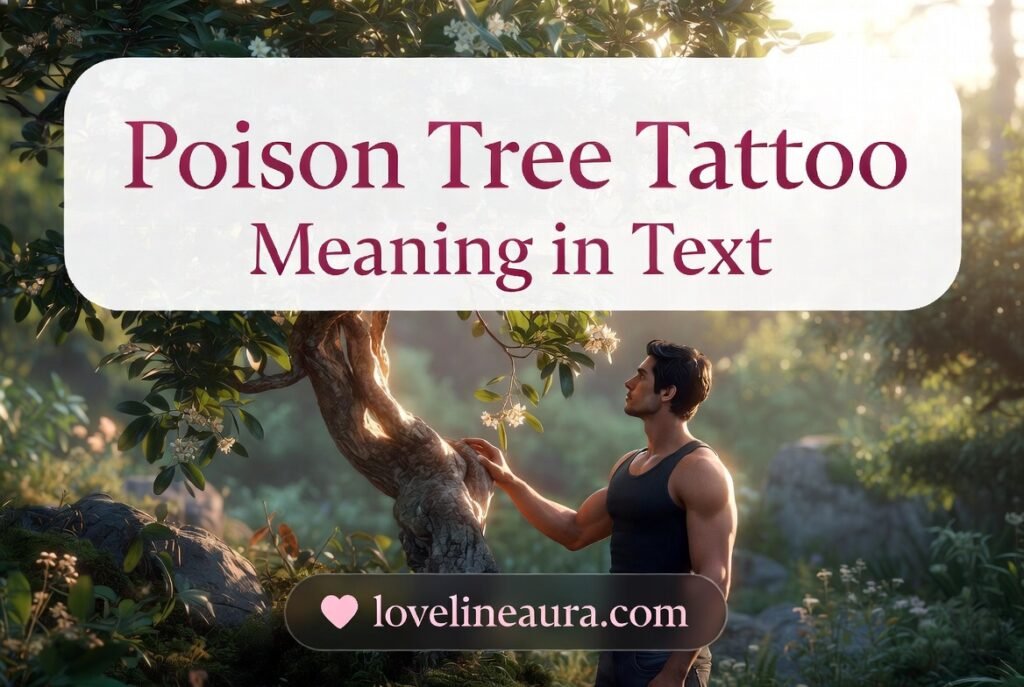

Understanding the *poison tree tattoo meaning helps reveal powerful emotions behind this striking poison tree tattoo. Inspired by A Poison Tree, the famous William Blake William Blake poem, this 1794 poem explores literary symbolism, literary roots, and lasting tattoo symbolism.
Many people choose this symbolic tattoo as meaningful body art, expressing hidden resentment, suppressed anger, unexpressed emotions, and deep emotional pain. Its rich symbolic meaning blends psychological symbolism, human psychology, layered meaning, and unforgettable emotional symbolism.
Beyond its tattoo meaning, this meaning in text reflects betrayal, silence, quiet destruction, destructive emotions, toxic emotions, and unresolved emotions through meaningful self-expression. The design often represents buried feelings, confronting anger, emotional growth, emotional healing, and a personal healing journey toward personal transformation.
Whether chosen as a dark tree tattoo, unique tree tattoo design, or expressive storytelling tattoo, every piece carries personal meaning, wearer meaning, deep symbolism, and meaningful life lessons through modern body art and permanent ink.
Also Read This: I Digress Meaning in Text: What It Means, How to Use It, and When It Fits
Poison Tree Tattoo Meaning in Text: A Symbol With Bite
A poison tree tattoo is not just a dark-looking design. It carries layered meaning. For many people, it points to hidden anger, betrayal, emotional pain, and the consequences of letting hurt grow in silence. In tattoo culture, that kind of symbol stands out because it feels personal instead of decorative.
The phrase poison tree tattoo meaning in text often comes up when people see the design online or hear someone describe it in a message. In plain language, it usually means a tattoo inspired by a tree that has become corrupted, dangerous, or emotionally heavy. Sometimes the meaning comes from literature. Sometimes it comes from personal experience. Often, it comes from both.
The Origin of the Poison Tree Symbol
The strongest literary source behind this symbol is William Blake’s poem A Poison Tree. Blake wrote it in 1794 as part of Songs of Experience. The poem is still widely discussed because it captures a simple truth: anger that is hidden can grow into something toxic.
That idea gives the poison tree tattoo its edge. The tree becomes more than a tree. It turns into a picture of what happens when pain is fed instead of faced.
The symbol also works because trees already carry deep meaning in many traditions. Trees can represent life, growth, wisdom, roots, and family. A poison tree twists that familiar image into something darker. That contrast makes the tattoo powerful.
William Blake’s Poison Tree Tattoo Meaning in Text
Blake’s poem is short, but its message is sharp. The speaker says he was angry with a friend and told him. That anger faded. But when he was angry with an enemy and did not speak, the anger grew. It became a poison tree. The enemy later died after eating its fruit.
That is why the poison tree tattoo meaning in text is often tied to unspoken resentment. The poem warns that silence can be dangerous when it protects bitterness instead of peace.
The Central Message
The poem’s central message is simple:
- Expressing anger honestly can defuse it.
- Hiding anger can make it grow.
- Resentment can poison both the person who feels it and the relationship around it.
- Suppressed emotion often returns in a more destructive form.
That message still feels relevant today. In a world full of quick messages and careful silence, the poem lands hard. It reminds people that bottled-up pain does not stay still. It spreads.
Core Poison Tree Tattoo Meanings
A poison tree tattoo can mean different things depending on the wearer. Still, a few themes appear again and again.
| Meaning | What It Usually Suggests |
| Hidden anger | Emotions kept inside too long |
| Betrayal | A wound caused by someone trusted |
| Revenge | The desire to strike back |
| Pain | Emotional damage that shaped the person |
| Growth through hardship | Learning from suffering |
| Inner darkness | Acknowledging a difficult side of the self |
| Boundaries | Protecting yourself after harm |
| Transformation | Becoming wiser through struggle |
Repressed Anger
This is the most direct meaning. A poison tree tattoo can show that someone has held in anger for too long. It may be a warning. It may be a confession. It may be both.
Revenge and Bitterness
Some people connect the tattoo to the idea of revenge. Not because the tattoo promotes violence, but because it reflects the emotional pull of wanting payback after harm. The tree becomes a symbol of bitterness that has grown roots.
Betrayal
A poison tree often speaks to betrayal. When trust breaks, the feeling can linger for years. The tattoo can mark that wound without saying every detail out loud.
Personal Growth Through Pain
Not every poison tree tattoo is about destruction. Some people wear it as proof that they survived something difficult. In that reading, the poison tree is a scar that became art.
Inner Darkness
The tattoo can also stand for the shadow side of human nature. People are not only light and calm. They also carry envy, grief, shame, and anger. The poison tree can hold all of that in one image.
Temptation and Forbidden Knowledge
The tree and fruit imagery can also suggest temptation. That does not always mean literal sin. It can mean the lure of a choice that feels good in the moment but hurts later.
Justice and Karma
For some wearers, the symbol is about consequences. Actions have outcomes. Silence has outcomes too. The tattoo can remind them that emotional poison never stays private forever.
Poison Tree Tattoo Meaning in Text and Modern Psychology
Modern readers often connect the poison tree to emotional health. That makes sense. The poem itself is almost a lesson in emotional regulation.
A person who chooses this tattoo may be expressing one of these ideas:
- “I do not ignore my pain anymore.”
- “I learned what happens when I bury anger.”
- “I know how betrayal changes a person.”
- “I turned a hard experience into a lesson.”
That is why the tattoo can feel deeply psychological. It is not just about what happened. It is about what the person did with what happened.
Poison Tree Tattoo Meaning for Men
For men, the tattoo often reads as strength under pressure. It can suggest emotional control, discipline, and survival after betrayal.
Emotional Resilience
A man may choose this tattoo to show that he endured something painful and did not break. The design becomes a sign of endurance.
Strength After Betrayal
Some men use the tattoo to mark a hard lesson learned from trust gone wrong. It says, in effect, “I have seen what betrayal does.”
Revenge Versus Forgiveness
The tattoo can also reflect an internal fight. Do you stay bitter, or do you let go? That tension gives the image weight.
Poison Tree Tattoo Meaning for Women
For women, the tattoo often carries a different kind of strength. It may point to healing, boundaries, and emotional intelligence.
Healing After Emotional Pain
The poison tree can symbolize the process of recovering from heartbreak, family wounds, or betrayal. It says that pain did not vanish. It changed form.
Independence
A poison tree tattoo can also mean self-protection. It may show that the wearer no longer lets people cross certain lines.
Personal Boundaries
This is one of the most practical meanings. The tattoo can stand for the lesson that not every hurt deserves access to your life.
Poison Tree Tattoo Meaning Based on Design Elements
The design details matter. A poison tree is not one fixed image. Small changes can shift the meaning a lot.
Dead or Bare Tree
A bare tree usually suggests loss, emptiness, or emotional exhaustion. It can also show that something once alive has been drained by pain.
Tree With Poison Apples
This version leans into temptation and danger. The fruit can symbolize a beautiful choice with a harmful result.
Tree With Black Roots
Black roots often point to buried pain. They suggest that the problem is not just visible on the surface. It runs deep.
Tree With Falling Leaves
Falling leaves can signal decline, grief, or the slow fading of trust and innocence.
Burning Poison Tree
Fire adds urgency. It can mean rage, destruction, cleansing, or a point of no return.
Poison Tree With Snake
The snake usually adds betrayal, deceit, temptation, or hidden danger. It makes the symbol feel more ancient and more threatening.
Poison Tree With Raven
A raven can bring death symbolism, mystery, memory, or a dark messenger vibe.
Poison Tree With Skull
This usually pushes the tattoo toward mortality, consequence, and the end result of poisonous feelings.
Poison Tree With Hourglass
An hourglass adds time. It can suggest that bitterness grows slowly but surely if left alone.
Poison Tree With Broken Chains
This version shifts the meaning toward freedom. It can show escape from emotional control, abuse, or toxic cycles.
Poison Tree Tattoo Placement Meaning
Placement changes how a tattoo feels.
| Placement | Common Effect |
| Forearm | Visible reminder of personal truth |
| Chest | Close to the heart, deeply personal |
| Back | Heavy, private, reflective |
| Sleeve | Narrative-rich and dramatic |
| Rib cage | Intimate and often painful, like the meaning itself |
| Shoulder | Strength and endurance |
| Hand | Bold statement, hard to hide |
A forearm tattoo tends to feel direct. A chest tattoo feels more emotional. A back tattoo often suggests that the meaning is private, even if the image is large.
Popular Poison Tree Tattoo Styles
The style can completely change the mood.
Blackwork
Blackwork gives the tattoo strong contrast and a serious tone. It suits the symbol well because it already feels heavy.
Fine Line
Fine line work softens the design. That can make the tattoo feel more poetic than aggressive.
Realism
Realism works well when the wearer wants the tree to feel grounded and vivid.
Neo-Traditional
This style adds bold lines and rich color. It can make the poison tree look dramatic and almost storybook-like.
Illustrative
Illustrative tattoos are a strong fit for literary meaning. They can make the design feel like it came from a page.
Gothic
Gothic styling deepens the darkness. It works well for themes of death, sorrow, and hidden emotion.
Minimalist
A minimalist poison tree tattoo often says more with less. One twisted trunk or one poisoned fruit can do the job.
Poison Tree Tattoo Idea Examples
Here are a few design ideas that match the meaning well:
- Small poison tree on the wrist or ankle
- Half sleeve with roots, thorns, and fruit
- Full back tree with black branches and fallen apples
- Minimal line art with one poisoned fruit
- Tree growing through cracked ground
- Tree with a Blake-inspired quote
- Tree with a raven perched in the branches
- Tree inside a circle to show emotional cycles
Case Study: Turning Betrayal Into a Tattoo
Imagine someone who went through a painful breakup after years of trust. At first, they said nothing. They kept the hurt inside and tried to act fine. Over time, the silence turned into anger. Later, they chose a poison tree tattoo on the forearm.
The tree had dark roots, one hanging apple, and cracked soil beneath it. For them, the tattoo meant this: “I learned what happens when I swallow the hurt.” That is the heart of the symbol. It turns a private wound into a visible lesson.
What to Consider Before Getting a Poison Tree Tattoo
A tattoo with this much meaning deserves real thought.
- Understand the literary background if Blake’s poem matters to you
- Decide whether you want the tattoo to feel personal or symbolic
- Choose design elements that match your story
- Think about placement and visibility
- Consider how the meaning may change over time
- Work with an artist who can balance detail and clarity
A tattoo like this should feel honest. Not trendy. Not random. Honest.
Common Misconceptions About Poison Tree Tattoos
People often misread the symbol.
It does not always mean revenge. Sometimes it means healing.
It does not promote violence. It usually reflects emotional consequence.
It does not only have a biblical meaning. The literary source is far stronger in most cases.
It does not always reference William Blake directly. Some designs are inspired by the poem while others simply use the image of a corrupted tree.
Poison Tree Tattoo vs. Similar Tree Tattoos
A poison tree tattoo is easy to confuse with other tree designs, but the meaning is different.
| Tattoo Type | Main Meaning |
| Poison tree | Hidden pain, resentment, consequence |
| Tree of life | Growth, family, connection, continuity |
| Dead tree | Loss, endings, survival |
| Oak tree | Strength, stability, endurance |
| Apple tree | Temptation, knowledge, fruitfulness |
That difference matters. A tree of life is usually hopeful. A poison tree is more conflicted. It speaks in a darker voice.
Who Should Get a Poison Tree Tattoo?
This tattoo suits people who want a symbol with depth. It fits those who connect with literature, emotional truth, or transformation through pain.
It may be a strong choice for people who:
- Value symbolism over decoration
- Want a tattoo tied to a real life experience
- Connect with Blake’s poem
- Want to mark recovery from betrayal
- Prefer tattoos that spark conversation and reflection
The poison tree tattoo is not for everyone. That is part of its appeal. It carries weight. It asks something of the person wearing it.
FAQs
What is the poison tree tattoo meaning and why is it so popular?
The poison tree tattoo meaning represents hidden resentment, suppressed anger, unexpressed emotions, and emotional pain. Many people choose this meaningful tattoo because its tattoo symbolism reflects personal struggles, self-expression, and lasting symbolic meaning.
How is the poison tree tattoo connected to A Poison Tree by William Blake?
The poison tree tattoo comes from A Poison Tree, a famous William Blake poem published as a 1794 poem. Its literary symbolism, literary roots, and psychological symbolism explore human psychology, betrayal, silence, and destructive emotions.
What does a dark tree tattoo symbolize in modern tattoo culture?
A dark tree tattoo often represents toxic emotions, unresolved emotions, buried feelings, and inner conflict. In modern body art, it serves as a storytelling tattoo with deep symbolism, emotional symbolism, and unique personal meaning.
Why do people choose this symbolic tattoo for personal growth?
Many people see this symbolic tattoo as a reminder of confronting anger, emotional healing, emotional growth, and a lifelong healing journey. It can also represent personal transformation, life lessons, and overcoming toxic relationships through meaningful self-expression.
What are the best tattoo placement and tree tattoo design ideas for a poison tree tattoo?
Popular tree tattoo design choices include detailed branches, roots, or a striking poison tree design that highlights its layered meaning. Common tattoo placement options include an arm tattoo, chest, back, or forearm, depending on the desired tattoo story and wearer meaning.
Conclusion
In the end, the poison tree tattoo meaning goes far beyond appearance, combining tattoo symbolism, symbolic meaning, and the timeless message of A Poison Tree by William Blake. Whether it reflects hidden resentment, suppressed anger, emotional pain, personal transformation, or emotional healing, every poison tree tattoo carries a unique personal meaning rooted in literary symbolism and deep symbolism. Choosing this meaningful tattoo allows you to express your tattoo story through modern body art, creating a lasting reminder of growth, resilience, and meaningful self-expression.