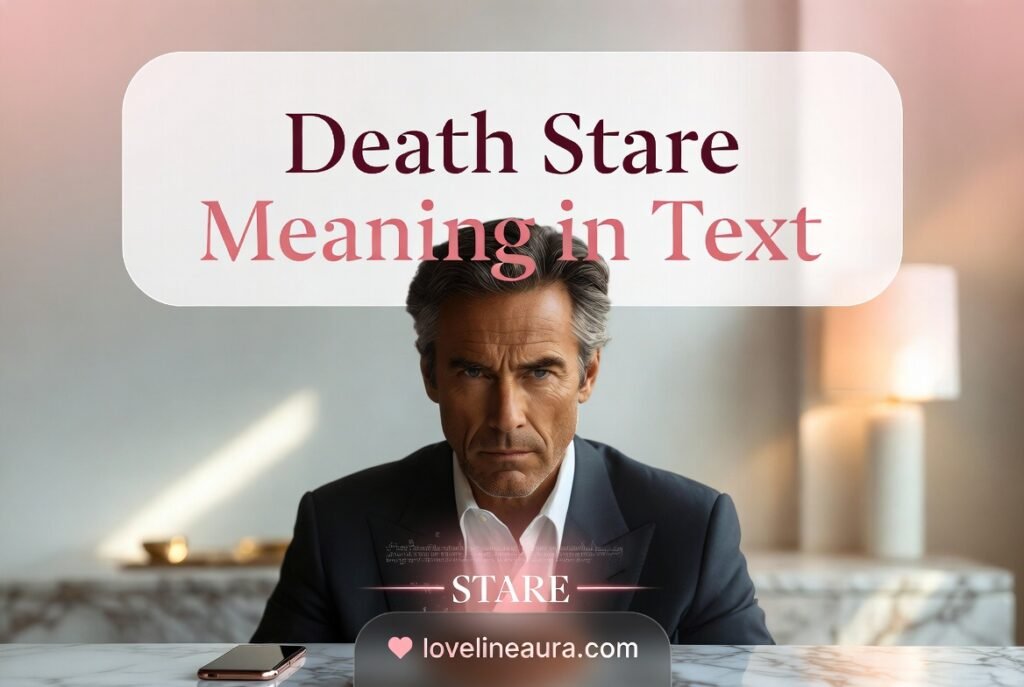

The death stare meaning usually describes a fierce look showing strong annoyance, anger, or disapproval. In death stare in text or death stare in chat, however, the phrase describes an intense look rather than an actual threat.
People use this common English expression in everyday conversations, social media, and casual language to describe a powerful reaction. Understanding the death stare definition requires paying attention to context, facial cues, and nonverbal communication.
A silent warning, judgmental look, or intimidating glare can communicate strong disapproval without words. Knowing the figurative meaning helps you avoid misinterpreting conversations and understand what someone means naturally.
Also Read This: In a Funk Meaning in Text: What It Means, How People Use It
What Does “Death Stare” Mean in Text?
In text, death stare usually means a very intense, angry, or disapproving look. People use it when someone seems so serious that the stare feels almost painful or threatening, even if nothing is actually said out loud. It is one of those phrases that sounds dramatic on purpose. That is part of the point.
When someone uses it in a message, they are usually describing a mood, reaction, or silent warning. For example, a person might text, “My mom gave me the death stare when I came home late.” In that sentence, the phrase does not mean literal danger. It means the look was strong enough to say, “You already know I am not happy.”
The simplest definition
A death stare is a hard, fixed, intimidating look that shows anger, disappointment, or warning.
Literal vs. figurative meaning
In real life, nobody means an actual deadly stare. In text, it is figurative language. The phrase exaggerates the expression for effect. That exaggeration makes it funny, dramatic, and easy to understand.
Why context changes the meaning
A death stare from a parent is not the same as a death stare in a meme. In one case, it can mean discipline. In another, it can mean a joke. Context does the heavy lifting here.
Death Stare Meaning at a Glance
| Situation | Likely Meaning | Tone |
| Parent to child | Disapproval | Serious |
| Friend to friend | Teasing or annoyance | Light or playful |
| Partner to partner | Frustration or silent warning | Personal |
| Coworker to coworker | Tension or irritation | Formal |
| Meme caption | Humor or exaggeration | Funny |
What Does “Death Stare” Mean in Text Messages?
In texting, the phrase often appears when someone wants to describe a face without sending a photo. It helps the speaker add emotion fast. A message like, “She gave me the death stare after I stole her fries,” paints a clear picture without a long explanation.
When someone says “I’m giving you the death stare”
That usually means the person is jokingly saying they are looking at someone with strong disapproval. Sometimes it is playful. Sometimes it is not. The key is whether the rest of the message feels serious or sarcastic.
When it’s used as a joke
A lot of people use death stare in a light way. They may say it about a sibling, friend, or teammate. In that setting, it works like comic exaggeration. The stare is not really deadly. It just feels dramatic enough to deserve the phrase.
When it signals annoyance
If the message includes short replies, a tense tone, or clear frustration, the death stare may mean the person is genuinely upset. In that case, the phrase is a warning sign. It tells you the mood is colder than usual.
Origin and Evolution of the Phrase “Death Stare”
The phrase grew from everyday English and became more common online because it is vivid. People like expressions that create instant mental pictures. “Death stare” does that better than plain words like “glare” or “angry look.”
Over time, social media turned the phrase into shorthand for extreme facial expressions. It now shows up in texting, memes, captions, gaming chats, and casual conversation. That flexibility is one reason it stuck around.
Why People Use “Death Stare” Instead of Saying They’re Angry
People often use the phrase because it says more than “I was mad.” It adds drama, humor, and personality. That makes the message more vivid.
Common reasons
- To show silent disapproval
- To describe frustration without a full argument
- To make a story sound funnier
- To exaggerate a reaction for effect
- To avoid saying something directly rude
“The face said everything. The text just gave it a name.”
Common Emotions Behind a Death Stare
A death stare does not always mean the same emotion. It can carry several moods depending on the situation.
- Anger: Someone feels crossed or ignored.
- Disappointment: The person expected better behavior.
- Jealousy: The look may come from feeling left out.
- Suspicion: Someone does not trust what just happened.
- Frustration: The person is tired of repeating themselves.
- Protectiveness: A parent or partner may be guarding boundaries.
- Competitive intensity: Common in sports or games.
What a Death Stare Actually Looks Like
In body language, a death stare usually has a few clear signs. The face gets still. The eyes lock in. The body tightens a little. Even without words, the message feels loud.
Typical signs
- Unbroken eye contact
- Narrowed eyes
- Tight lips
- Minimal blinking
- Tense facial muscles
- Still posture
- Raised or lowered eyebrows depending on emotion
These signs do not prove anger by themselves. Still, together they create a strong impression. That is why the phrase works so well in text.
Death Stare in Body Language
Body language matters because people read faces faster than they read paragraphs. A stare can say “I am serious” before a single word arrives.
Eye contact
Direct eye contact can feel confident. But too much of it can feel hostile. The difference depends on intensity, duration, and expression.
Facial tension
A relaxed face feels open. A tense face feels loaded. If the jaw tightens and the eyes sharpen, people usually sense conflict.
Posture
A person standing very still often looks more intense than someone moving casually. Stillness can make the stare feel heavier.
The Psychology Behind a Death Stare
Humans are built to notice faces quickly. That is why a strong stare can change the mood of a room in seconds. It triggers attention because the brain treats eyes as important social signals.
A death stare often activates threat detection. It may not mean danger, but the mind still asks, “Is this person upset with me?” That quick reaction explains why the phrase is so useful in conversation.
Death Stare Meaning Depends on Context
The same stare can mean very different things depending on where it happens.
In family settings
A parent’s death stare often means, “We are not discussing this now.” It can be a warning, a correction, or a quiet form of discipline.
In friendships
Between friends, it may mean teasing. One person might stare after a joke, a prank, or a bad decision. The mood can still be playful.
In work settings
At work, a death stare can suggest irritation, pressure, or disagreement. People often avoid saying things directly, so the stare does the talking.
What It Means When Different People Give You a Death Stare
From a teacher
Usually disapproval, control, or “please stop right now.”
From a boss
Often frustration, disappointment, or a signal that the moment is serious.
From a friend
Could be teasing, sarcasm, or mild annoyance.
From a romantic partner
Usually emotional tension, jealousy, hurt feelings, or silent conflict.
From a stranger
This can feel unsettling because there is no shared context. It may be accidental, but it may also feel intimidating.
Death Stare vs. Similar Expressions
| Expression | Meaning | Difference |
| Death stare | Strong, intense, intimidating look | Most dramatic |
| Glare | Angry look | More general |
| Dirty look | Sign of disapproval | Less intense |
| Side-eye | Suspicious or judgmental glance | More subtle |
| Blank stare | No clear emotion | Often neutral or disconnected |
A death stare usually feels more forceful than the others. It carries a sharper emotional edge.
Death Stare Meaning in Texting and Online Conversations
Online, the phrase often appears in captions, replies, and reaction posts. People use it to describe a facial expression they cannot fully show through plain words.
Emoji combinations
Some common combinations help suggest the same feeling:
- 😒 for annoyance
- 😑 for deadpan irritation
- 🙄 for judgment
- 👀 for watchfulness or tension
GIFs and reaction images
A reaction GIF can carry the same meaning as “death stare” in text. It gives the message emotional weight without needing a long explanation.
Gaming communities
In games, the phrase often appears after a bad move, a betrayal, or a competitive moment. It becomes part of the trash talk, but often in a playful way.
Death Stare in Movies, TV Shows, Anime, and Gaming
Writers and directors love the death stare because it creates tension fast. A villain uses it to intimidate. A hero uses it to show resolve. In anime and games, the expression often becomes iconic because it looks exaggerated and memorable.
That is why the phrase spreads so easily online. People borrow it from scenes that already feel dramatic.
Real Examples of “Death Stare” in Conversations
Family
“Dad gave me the death stare when I forgot to do the dishes.”
School
“The teacher hit me with a death stare after I whispered in class.”
Work
“My manager gave me the death stare after I missed the deadline.”
Friendship
“She gave me the death stare when I ate her fries.”
Relationship
“He sent the death stare after I replied late again.”
Sports
“Our coach gave us the death stare after we lost focus.”
These examples show the phrase in action. It is flexible, but the emotional center stays the same.
How to Respond to a Death Stare
The right response depends on the setting. In some cases, the best move is to apologize. In others, it is better to stay calm and wait.
Smart ways to respond
- Stay calm
- Read the room
- Do not escalate
- Speak respectfully
- Clarify the misunderstanding
- Step back if the situation feels tense
A death stare is often a signal, not a final statement. Treat it that way and you will usually avoid making things worse.
Common Misconceptions About the Death Stare
A few myths keep popping up online.
It always means hatred
Not true. It can mean annoyance, humor, or even dramatic flair.
It always signals violence
Also not true. Most death stares are emotional, not dangerous.
Every serious face is a death stare
No. A serious face can be neutral or focused.
Everyone reads it the same way
Not at all. Culture, mood, and relationship all shape interpretation.
A Quick Case Study
A student jokes around in class and gets a look from the teacher. The student texts, “I just got the death stare.”
In that case, the phrase does three jobs at once. It reports what happened. It adds humor. It tells the reader that the teacher’s look felt strong enough to shut the room down.
That is the real power of the phrase. It compresses a whole social moment into two words.
FAQs
What does death stare meaning refer to in everyday conversations?
A death stare is an intense look or angry expression that shows strong annoyance, judgment, or strong disapproval. Its figurative meaning usually communicates a powerful reaction without words.
What is the death stare in text or death stare in chat meaning?
In death stare in text and death stare in chat, the phrase usually describes someone giving an intimidating look or powerful glare. The chat meaning depends on the context and conversational situation.
How do you recognize a death stare from facial cues?
You can recognize a death stare through an angry glare, intense eye contact, and a facial expression of disapproval. These nonverbal cues often communicate silent disapproval or frustration.
Why do people use the phrase death stare in social media conversations?
People use death stare as a common phrase to describe silent communication, strong emotion, or negative emotion. Its social media meaning is usually figurative rather than a literal threat.
How can you avoid misinterpreting conversations involving a death stare?
Focus on the meaning in context, social context, and surrounding words before interpreting the expression. Understanding body language and facial cues can help you read the intended figurative expression correctly.
Conclusion
A death stare is a powerful facial expression that often communicates anger, frustration, judgment, or strong disapproval without words. In text meaning, chat meaning, and social media meaning, it usually carries a figurative meaning rather than an actual threat. Understanding the meaning in context, facial cues, and nonverbal communication helps you recognize what someone intends. By considering the conversational context, you can understand this common English phrase naturally and avoid misinterpreting conversations.